

I was bullied at school and wasn’t confident at all as a child, Confidence is not always something we are born with. Sometimes it is built slowly, through small decisions to keep going when quitting would be easier or not trying at all.
I know this because I was not a confident child. I was bullied at school, called “Powder Puff” and made to feel physically weak and socially insignificant. I did not look like someone who would eventually spend more than 45 years training in Martial Arts or more than 35 years teaching them.
I certainly did not begin with a natural gift for Martial Arts or self defence. I began with low confidence, a great deal of self-doubt and a need to find a different direction.
The child behind the nickname
At school, I was not sporty or physically assured. Any team sport like football, cricket or rugby, I was always one of the last ones to be picked for a team. Being called “Powder Puff” was not a harmless joke to me. It reinforced the idea that I was somehow less capable than the other boys and that I was ‘weedy.’.
When you are young, repeated comments can become part of the way you see yourself. You start to accept other people’s opinions as facts. I believed I was not strong enough, brave enough or talented enough to change my situation.
That mindset affected more than my physical confidence. It influenced how I approached challenges generally. If something looked difficult, my first thought was often that I would probably fail, so why bother trying it in the first place.
The turning point came when I was 14.
A mentor helped me see another possibility
For one year at secondary school, I was taught French by Monsieur Le Faucher, an academic mentor from France. He recognised qualities in me that I had not yet learned to recognise in myself. He encouraged me to try Martial Arts. That suggestion mattered because it was not presented as a way to become aggressive or to prove something to other people. It was offered as a way to learn, develop and discover what I might be capable of doing. He also helped me to improve my academic schoolwork, so I ended up with a decent bunch of O Levels.
I began with Karate. Later, I added Judo and Boxing.
Each discipline gave me a different piece of the puzzle. Karate introduced me to structured movement, distance and technical precision. Judo taught me about balance, timing, grip and what happens when technique is applied at close range. Boxing gave me a practical understanding of footwork, defensive movement and the pressure of working with an opponent.
At first, the training was very challenging. I was learning unfamiliar movements while also trying to change the story I had been telling myself for years. I started with a number of my friends, it didn’t take long for them to show how much that my they were.
Courage arrived before expertise
Within about three months, I felt fearless.
That does not mean I suddenly became an expert. It means that I stopped being controlled by the fear of being bullied. I began to believe that I could deal with difficult situations rather than simply hoping they would not happen.
There is an important difference between feeling confident and being competent at self-defence. Confidence can develop quickly when you experience progress and discover that you can cope with pressure. Competence takes longer. It requires repetition, lots of it, coaching, realistic practice and the ability to make good decisions when tired or stressed.
It took me another couple of years to become genuinely competent at self-defence. During that time, I learned that physical skills were only one part of staying safe. Awareness, communication, positioning, emotional control and knowing when to leave a situation are just as important.
That remains central to the way we teach at the Basingstoke dojo. We want students to develop useful physical skills, but also the judgement to avoid unnecessary confrontation wherever possible.
I was never the natural in the room
People sometimes assume that a successful coach must have been an exceptional athlete from the beginning. That was not my experience.
I was never the natural. I had to work for improvements that appeared to come more easily to other people. I made mistakes, struggled with techniques and had periods when progress seemed frustratingly slow. Funny enough, this is still the story of my training today.
Over time, however, I discovered that perseverance is often more reliable than talent. Natural ability can provide a useful start, but it does not replace consistent practice. A person who keeps learning may eventually overtake someone who relies only on what came easily to them.
My training has taken me around the world and allowed me to learn from some of the very best instructors and practitioners in Martial Arts. I made decision many years ago to train with the best teachers that I could, and these included Dave Owen Sensei in Torbay, Asano Sensei in Nottingham, Kanazawa Sensei from Japan, Steve Rowe Sifu from Chatham, Robert Mustard Sensei from Canada and Neil Saunders Sensei from Bexley Heath.
Each mentor contributed something different to my understanding. Some lessons were technical. Others concerned teaching, timing, discipline, ethics or the responsibility that comes with coaching. The deeper I travelled into Martial Arts, the more I understood that progress is not about collecting techniques. It is about learning how to use knowledge responsibly and helping other people develop.
From Marlow Bottom to a Basingstoke home
I began teaching in 1982. In the early stages, the academy grew in Marlow Bottom to serve more students and families across the area. Eventually, Shin Gi Tai Martial Arts Academy established its Basingstoke home as a full-time professional training venue.
That change was significant. A permanent Basingstoke dojo allowed us to build a consistent training environment, develop a wider Academy coaching team and provide classes for children, teenagers and adults throughout the week.
It also gave us the opportunity to create the type of community I would have valued when I was younger: somewhere that people could arrive with different levels of confidence, ability and experience, without being dismissed because they were beginners.
I have now taught several generations of students. Some of the children I coached years ago have become coaches themselves. Watching them teach younger members is one of the most rewarding parts of my work because it shows that Martial Arts knowledge can be passed on while still developing with each generation.
The lesson is larger than physical technique
Martial Arts gave me confidence, and the right to stop saying “I was bullied at school.” It also gave me friendships, structure and a supportive community. The people I trained with became part of my life, and the relationships formed through shared effort often lasted far beyond individual classes or competitions.
That is why inclusion is not an extra feature of our teaching philosophy. It is part of the foundation. People come to the Basingstoke academy with different bodies, backgrounds, motivations and learning needs. Some want practical self-protection. Others want fitness, stress relief, traditional practice or a new social environment.
Personalised training means recognising those differences and adapting the coaching appropriately. We consider age, physical development, previous experience, confidence, biomechanics and individual goals. We also use ideas from modern sports science to improve how we teach.
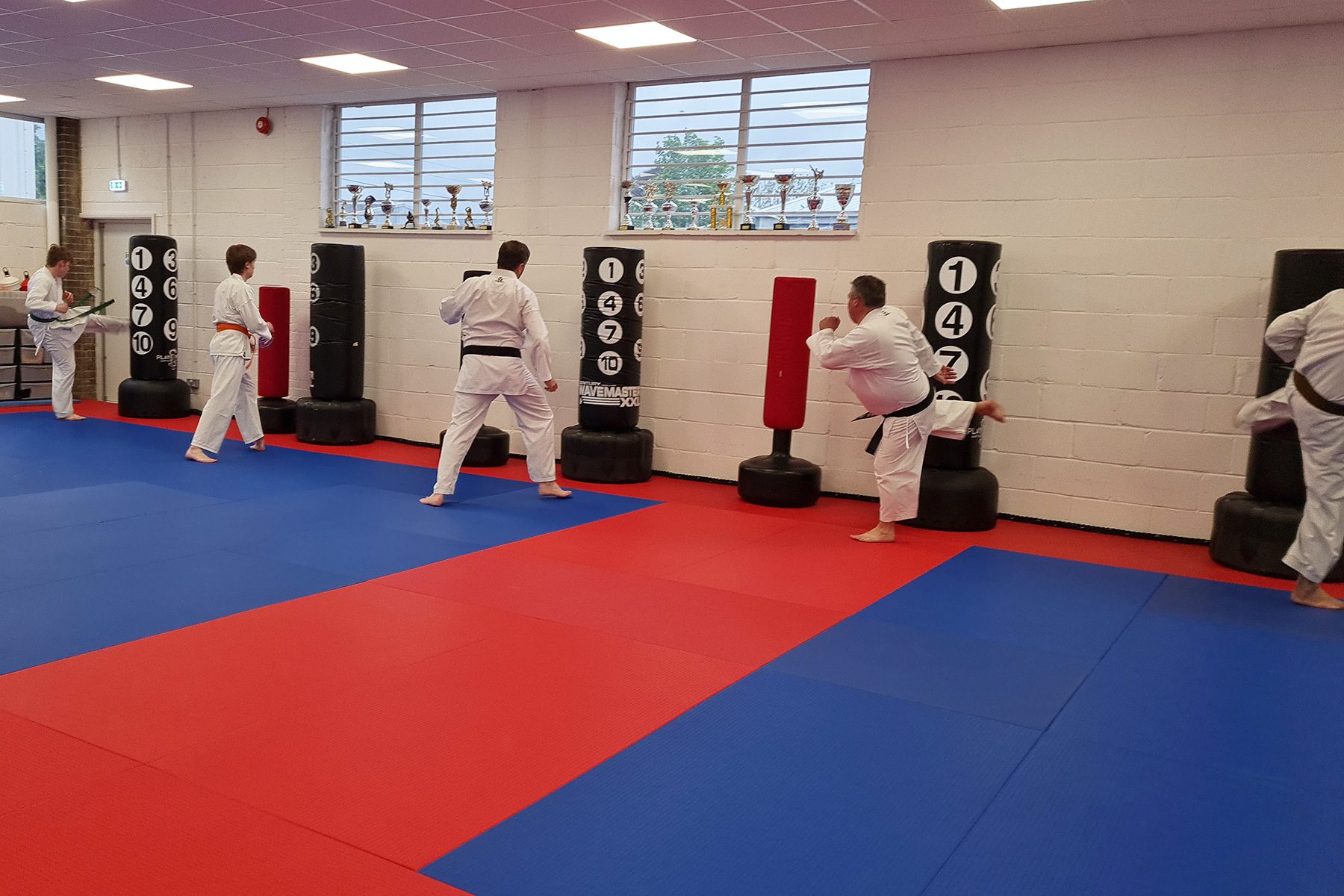
For example, good Martial Arts training develops physical literacy: the ability to understand, control and use your body effectively. Students work on proprioception, or body awareness, as well as kinetic chain integration, where the body works together rather than relying on one isolated limb. They practise multi-planar movement, dynamic balance and stability, and reactive agility.
These qualities are useful whether you are learning to move safely during everyday life, returning to exercise after a long break or developing more advanced Martial Arts skills.
What we teach at the Basingstoke dojo
Our Children’s and Adult’s syllabus were designed with self protection in mind and cover long and mid range skills plus close quarter grappling with techniques drawn from Karate, Kung Fu and Judo. Adults can also learn Muay Thai from Thailand, Our Ladies Only classes learn Chinese Kickboxing and for those wanting to look at a more relaxed form of exercise Yang Style Tai Chi.
The syllabus gives students a structured route through learning and mastering. It is not about expecting instant perfection. We break skills into manageable stages, practise them repeatedly and help each person understand how and when they should be applied.
Children can begin from the age of four in age-appropriate classes. Adults can start as complete beginners, regardless of current fitness level. Our Children’s Martial Arts classes in Basingstoke focus on confidence, physical literacy, concentration, discipline and practical self-protection. Our Adult’s Martial Arts classes in Basingstoke provide a route into fitness, self-defence, technical study and long-term personal development.
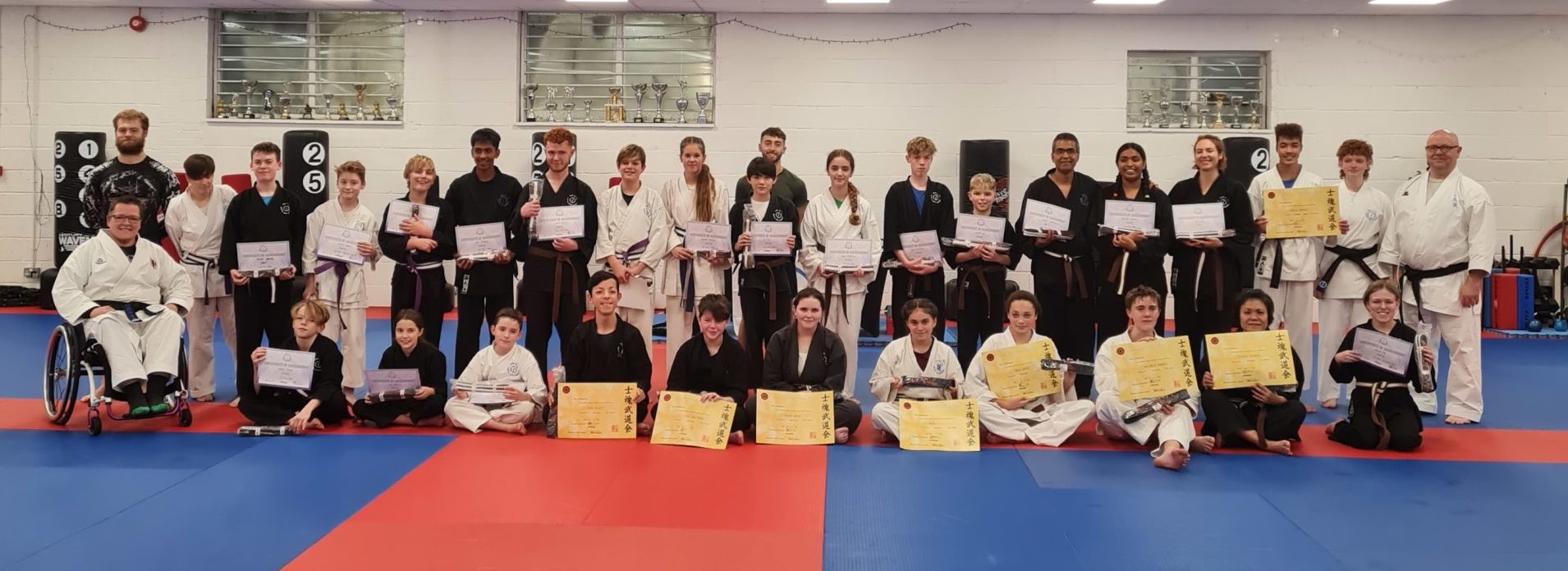
The waiting area at our Basingstoke venue is designed so that family members can watch the class. This helps parents understand what their children are learning and allows families to share in the progress, whether that means a first confident step onto the mats or the completion of a Black Belt grading.
The next generation matters
My own journey began because one mentor took the time to see more in me than I could see in myself. That experience influences how I approach coaching today.
The Academy coaching team aims to give students clear instruction, appropriate challenges and encouragement that is honest rather than exaggerated. We do not tell people that progress will always be easy. We help them understand that mistakes are part of learning and that setbacks provide information about what needs more practice.
A child who is nervous about joining a class may need a gradual introduction. An adult who believes they are “not sporty” may need to experience a few small successes before their confidence changes. A long-term student may need a new technical challenge to continue progressing.
The coach’s job is to meet each person where they are and help them take the next useful step.
That is the principle I needed when I was 14. It is also the principle I want the next generation of Shin Gi Tai instructors to carry forward in Basingstoke and through our sister business in Winchester.
You do not have to be naturally talented

If you are considering Martial Arts but doubt whether you have the right personality, fitness or coordination, I understand that hesitation.
You do not need to arrive fearless. You do not need to be naturally athletic. You do not need to know how to punch, kick, fall or perform a formal technique.
You need only be willing to learn and practice. These two things will propel your Martial Arts journey skywards.
The process may begin with a small goal: attending one class, remembering a basic movement or speaking to a training partner. Over time, those small goals can become improved fitness, stronger self-belief and the confidence to handle challenges with a more positive mindset.
My school nickname was meant to define me. Martial Arts gave me the chance to define myself instead. Many years later, one of my teachers, Mitsuoka Sensei, gave me the nickname, Bryan the Lion, because I was fearless in training and would Kiai very loudly.
If you have your own experience of gaining confidence, starting again or learning something that changed your direction, I would be interested to hear it.
You can find details of our Basingstoke Children’s Martial Arts classes and Adult’s Martial Arts classes on the website.
About the author
Bryan Andrews is the founder and head coach of Shin Gi Tai Martial Arts Academy. He brings more than 45 years of Martial Arts training and over 35 years of teaching experience to the academy. Bryan holds black belts in five Martial Arts, including 7th Dan Karate, 7th Degree Kung Fu and 3rd Dan Shotokan Karate, together with black belts in Judo and Yoshinkan Aikido. He is also the Shikon England National Karate Squad Coach and a nationally recognised Tai Chi teacher.
Alongside his extensive practical experience, Bryan holds a Level 7 Master’s Degree in Advanced Sport Coaching Practice from Sheffield Hallam University. His professional qualifications include the British Judo Association Level 5 Coaching Award, UKCC Level 4 Coaching Award and BCCMA Level 3 Coaching Qualification. He is also an experienced coach educator, training and supporting coaches through their Level 1 and Level 2 qualifications.
Bryan’s Master’s research explored how children and adults learn physical skills, develop confidence and achieve lasting progress through evidence-informed coaching. This combination of academic knowledge, high-level coaching qualifications and decades of practical experience shapes the academy’s approach. Every class is carefully structured to help students progress safely and effectively, with coaching adapted to each person’s age, ability, experience and individual needs.
If you would like to experience a class for yourself, or bring a child to meet the Basingstoke coaching team, book a Free Taster Session.